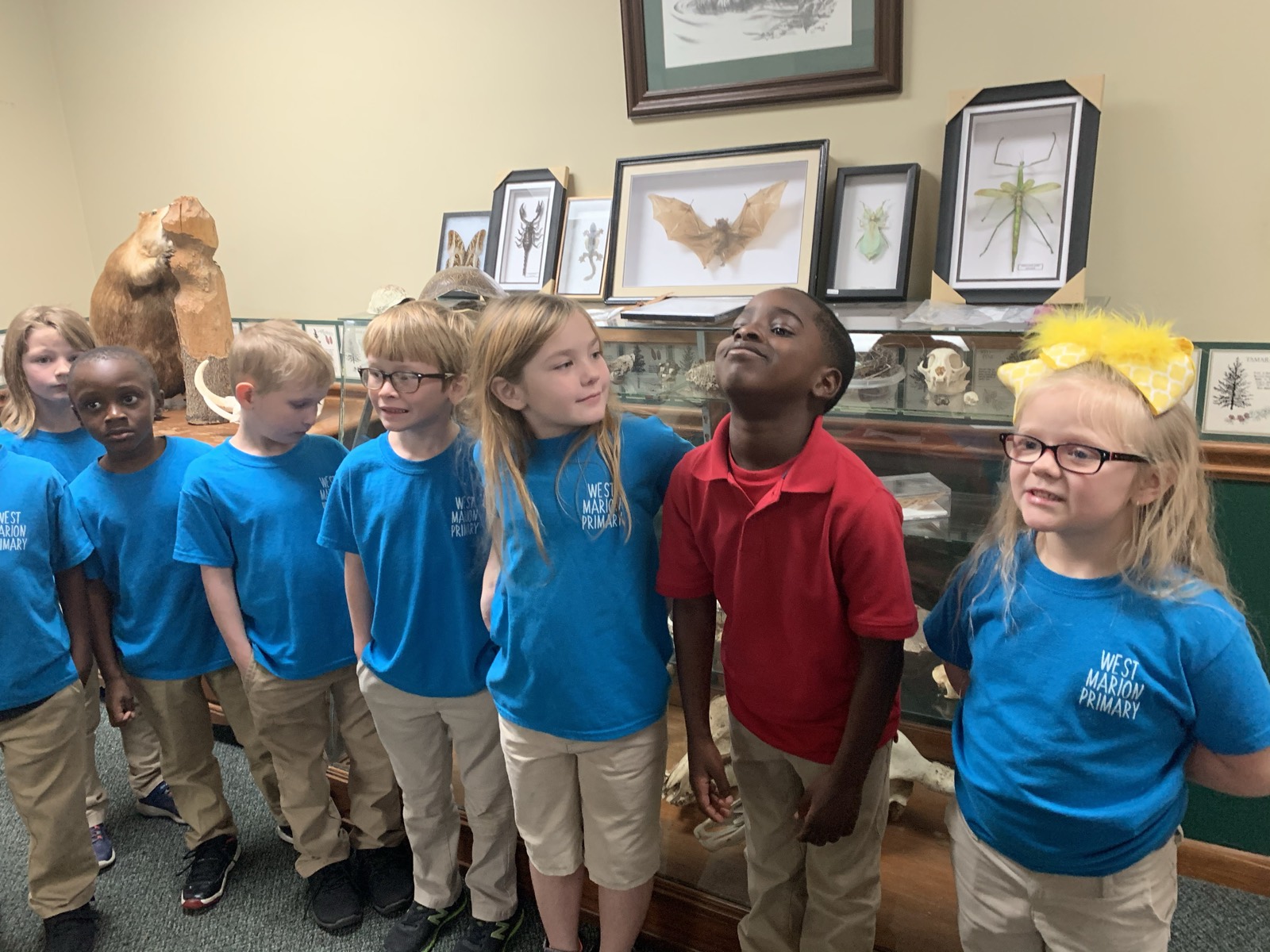
Daytime, by appointment
Regular hours are Thursday–Saturday evenings, but school groups come during the day. We set the time around your schedule.
Teachers · Homeschool · Libraries · Youth groups
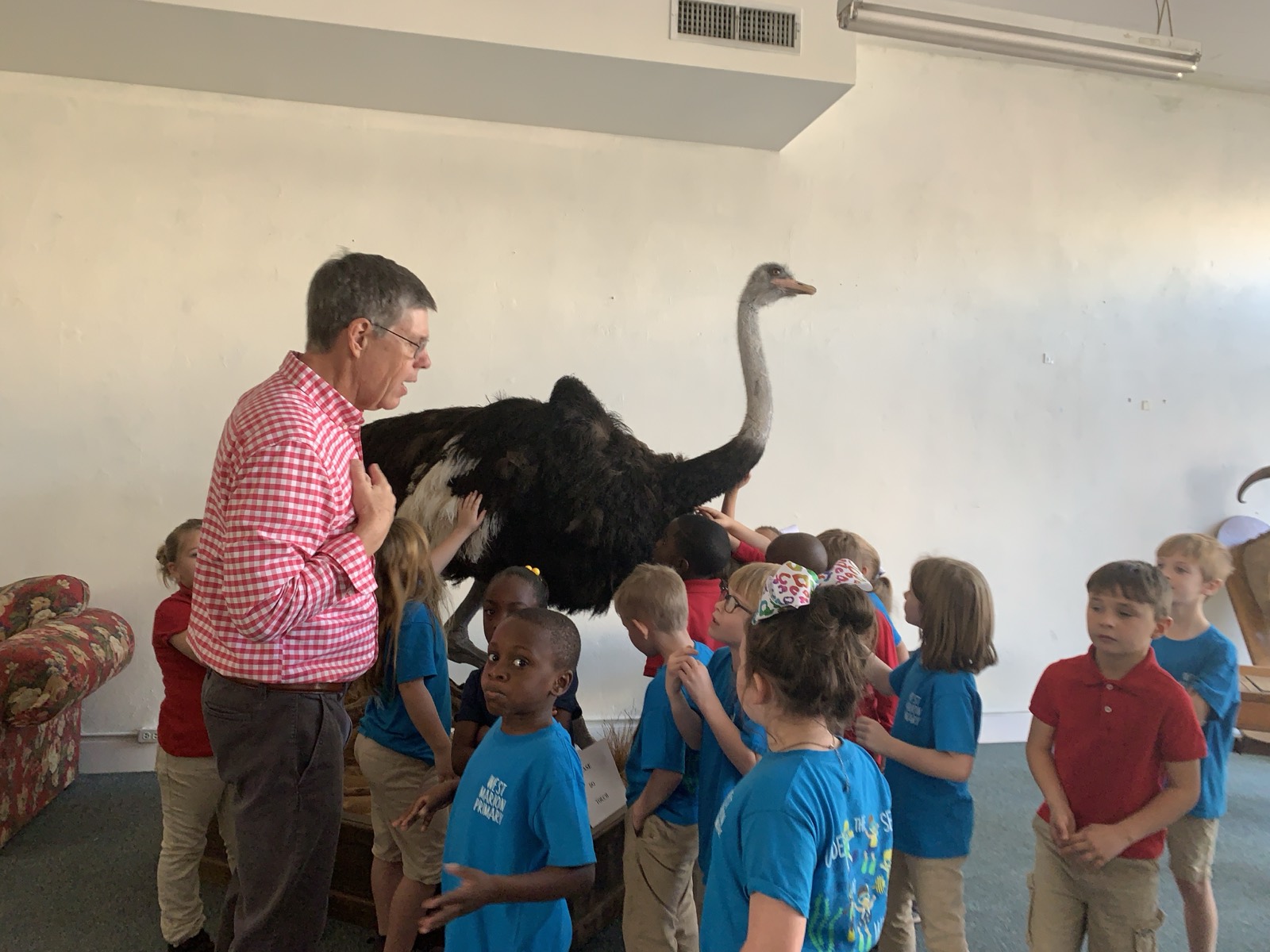
Daytime tours by appointment — real specimens in their hands, and the man who collected them telling the story.
From an educator
“As an educator, I've taken young student groups through the museum several times and their eyes tell the tale. They love participating in the ‘scavenger hunt’ of animals and relics on display.”
Jay Rayborn, Ph.D. · Chief Operations Officer, Columbia School District
What a class visit looks like
Regular hours are Thursday–Saturday evenings, but school groups come during the day. We set the time around your schedule.
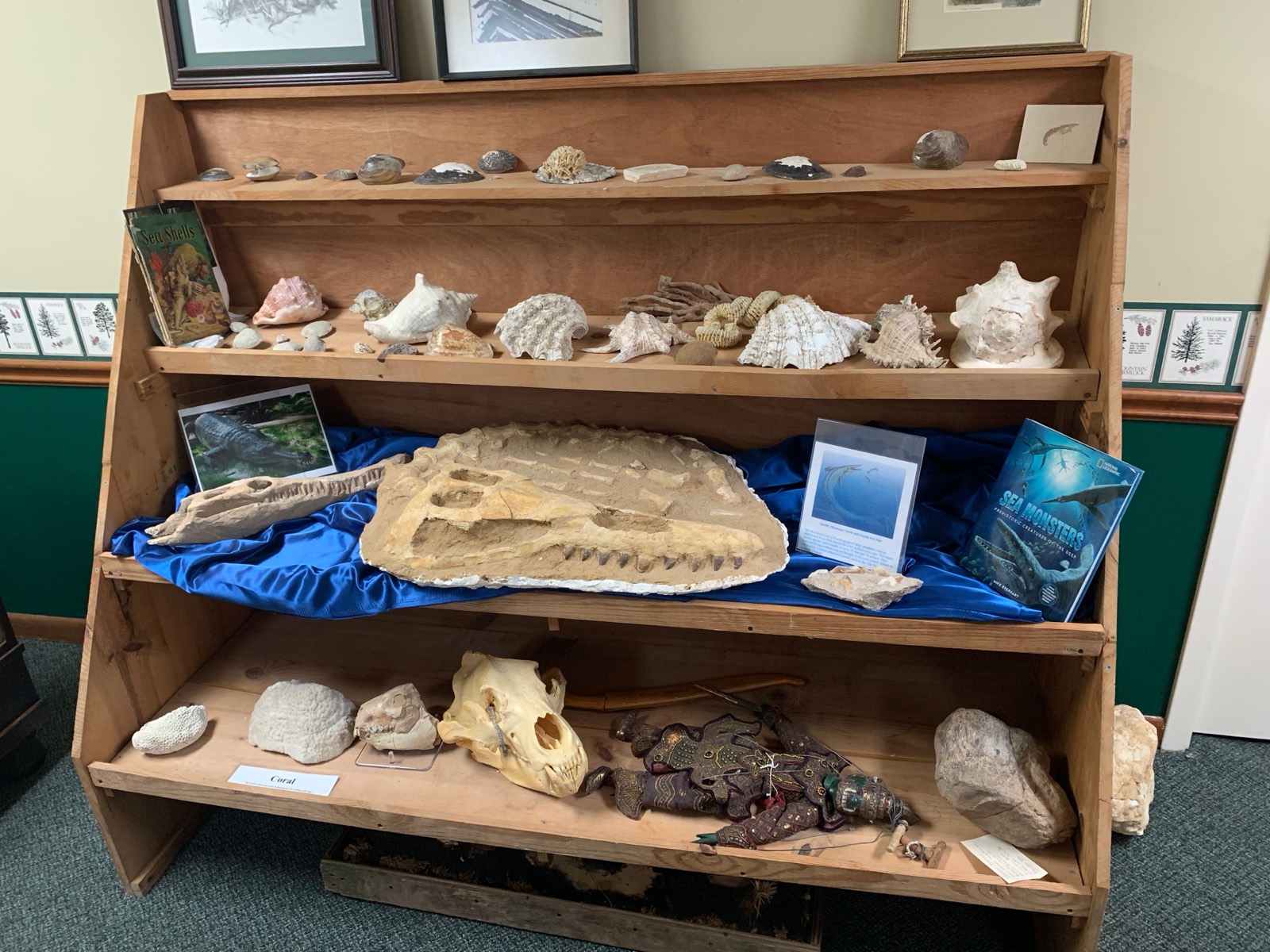
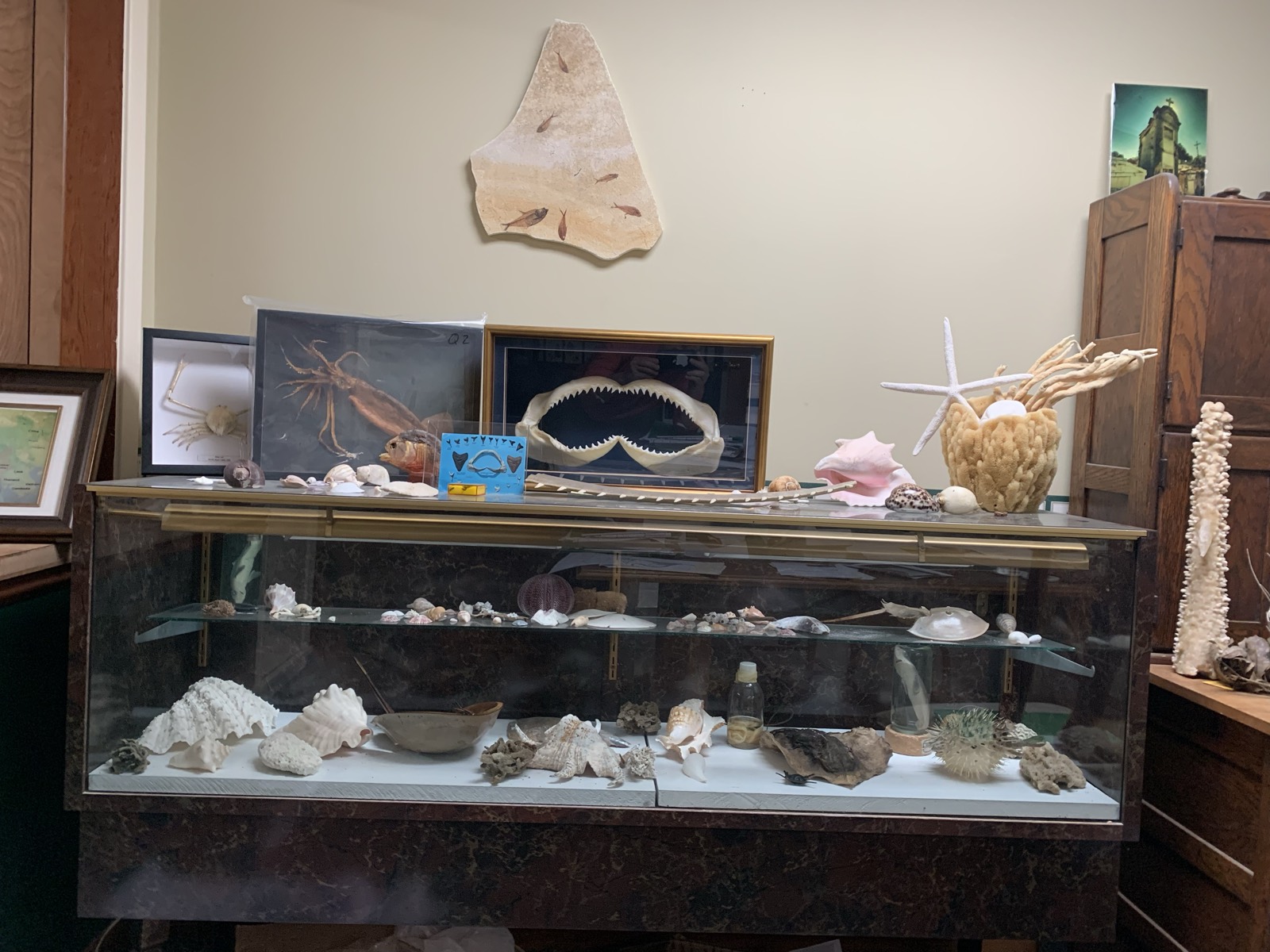
Fossils, dinosaur tracks, skulls, tusks and life-sized mounts — collected over a lifetime, and shown up close instead of behind a rope.
Some pieces carry a PLEASE DO TOUCH sign on purpose. Curiosity works better when a student can put a hand on it.
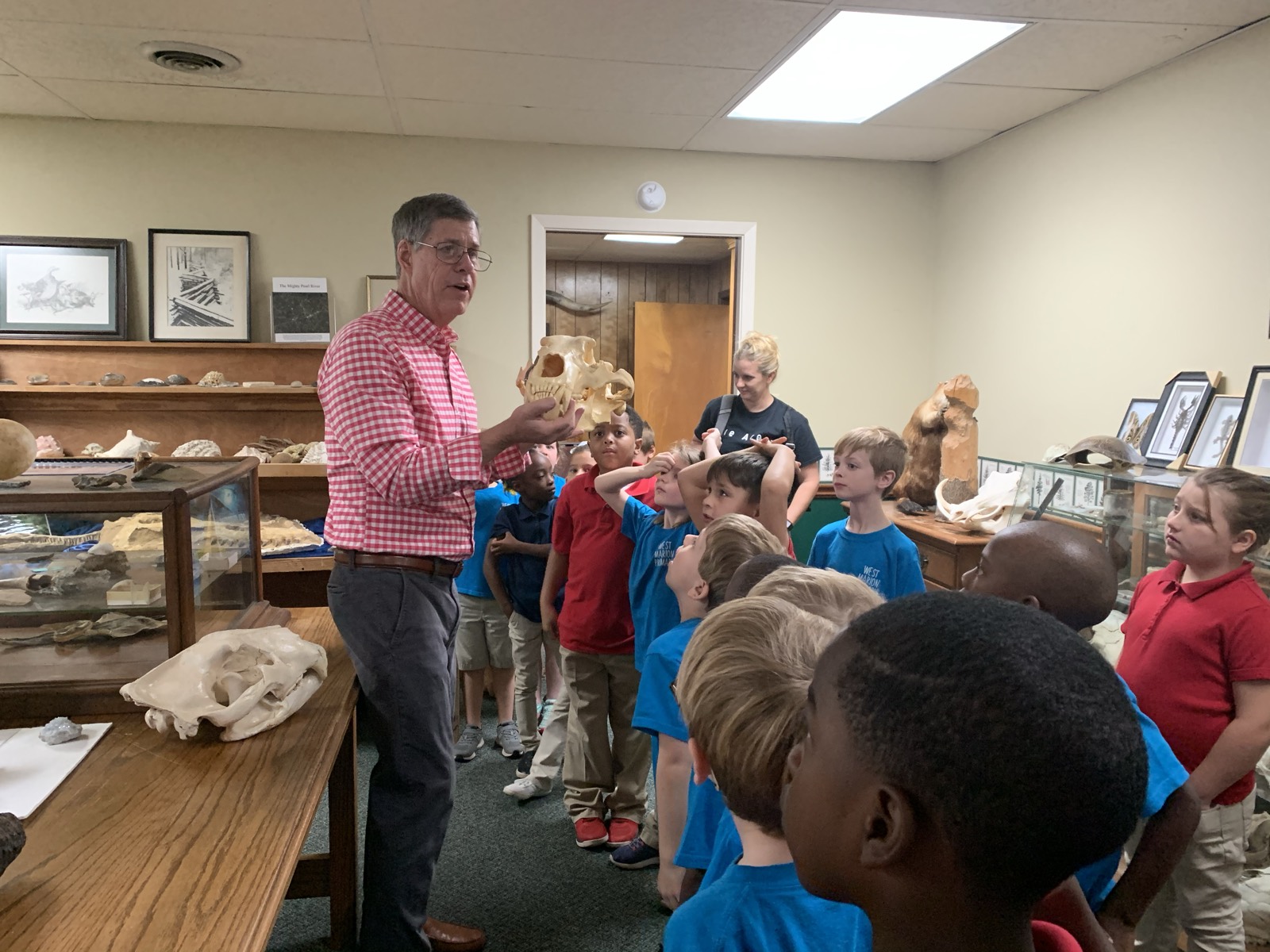 The guide is the collector
 The guide is the collector
Mickey Webb spent his working life in Mississippi's forests, and he gathered most of what is in this building himself. On a class visit he doesn't hand you a script — he picks a skull up off the table and asks the room what it ate.
Students ask questions they would never ask a display case, and they get an answer from the person who found the thing.
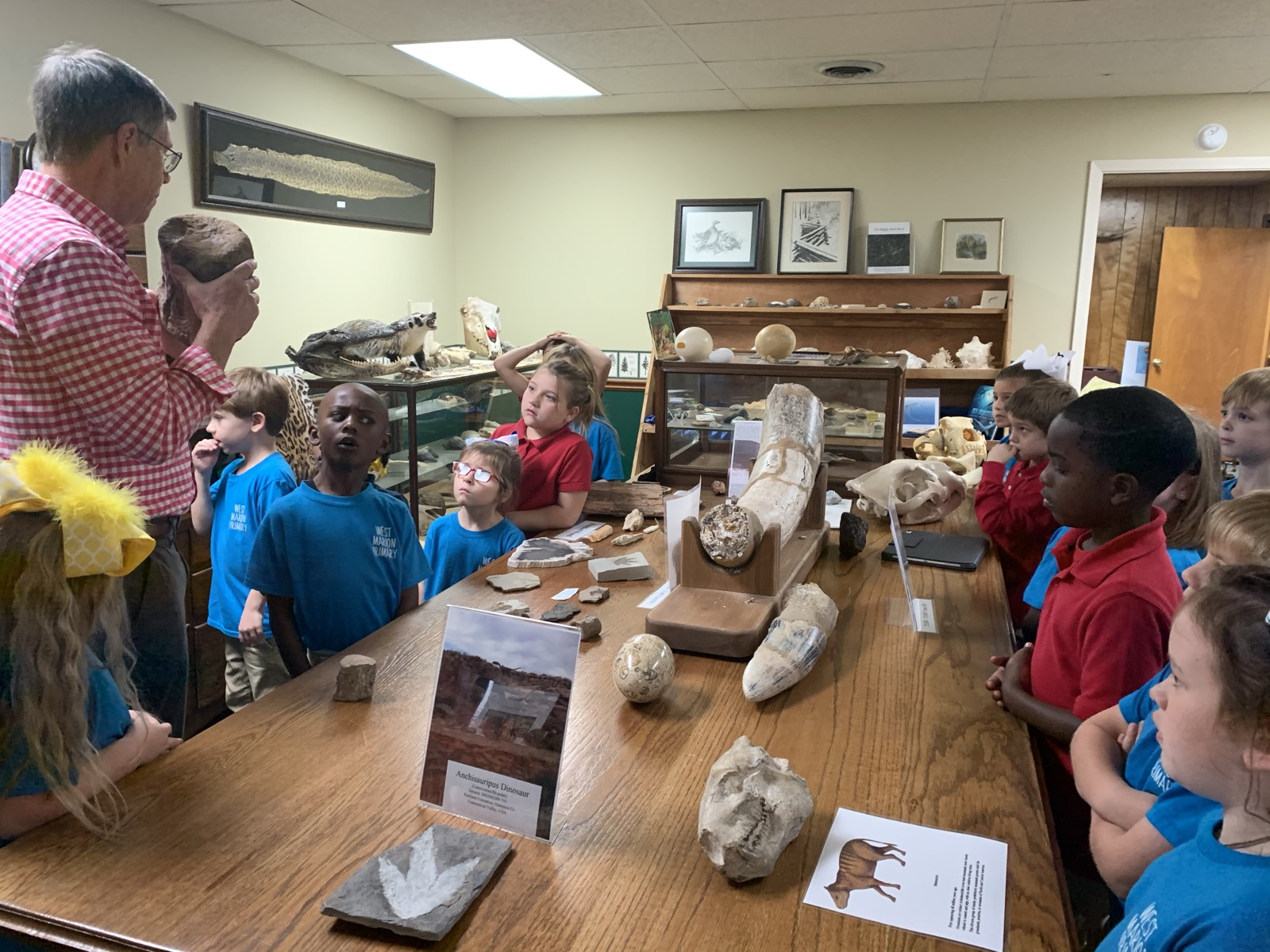 The fossil table
 The fossil table
A dinosaur track cast, a mastodon tusk, petrified wood, ammonites and fossil bone — all set out at kid height where a class can crowd around and compare them.
It is the part of the tour where the questions get loud, and it is the easiest tie-in to what you are already teaching: rocks and fossils, habitats, adaptation, Mississippi's own natural history.
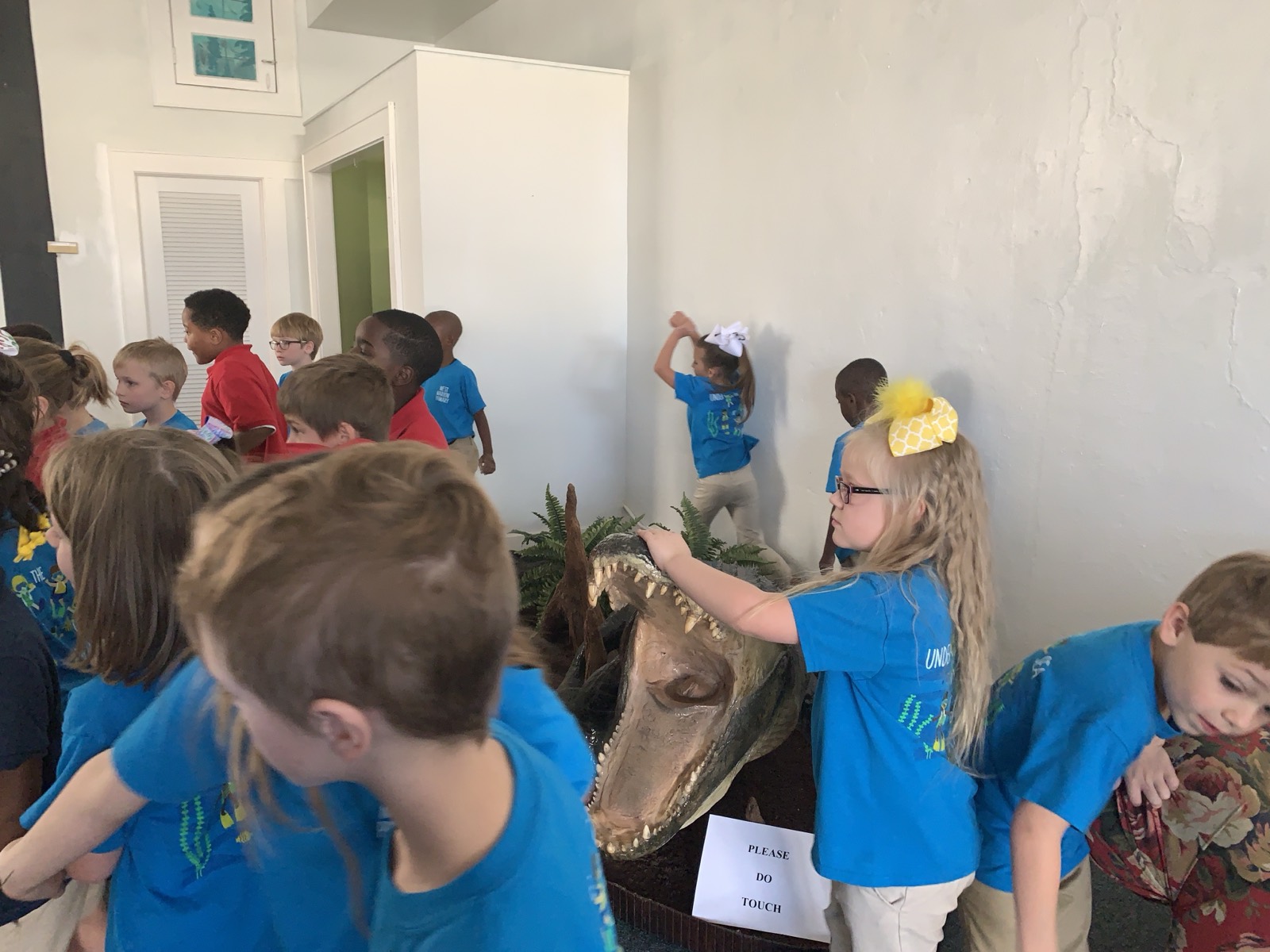
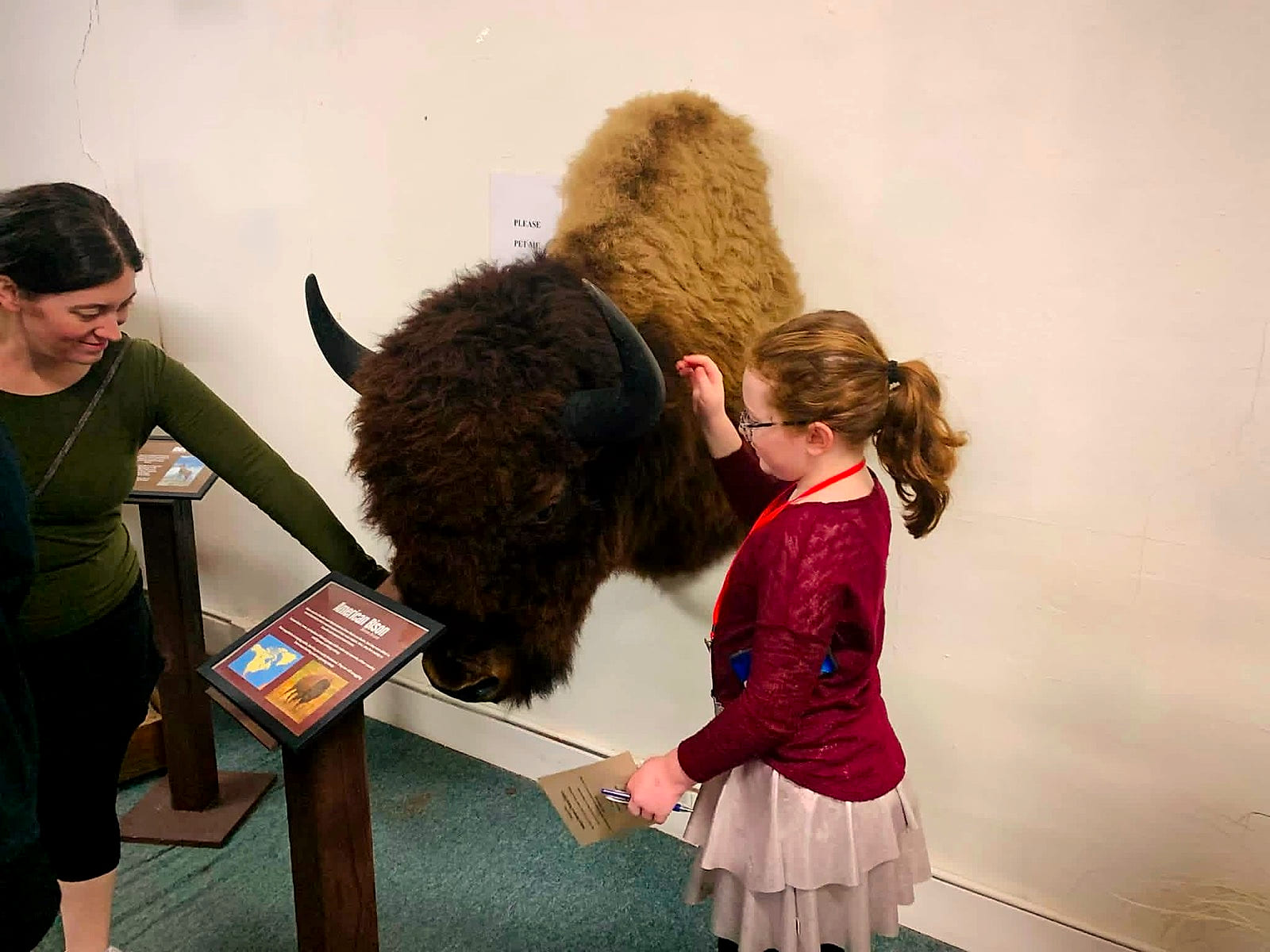 Why the signs say touch
 Why the signs say touch
The bison has a sign that reads PLEASE PET ME. So does the alligator. That is a deliberate choice, not an oversight — a rural class that has never stood next to a bull moose or run a hand over an alligator's back remembers it for years.
Activity sheets at the door turn the visit into a scavenger hunt, so students have something to look for and something to bring back to the classroom.
The full testimonial
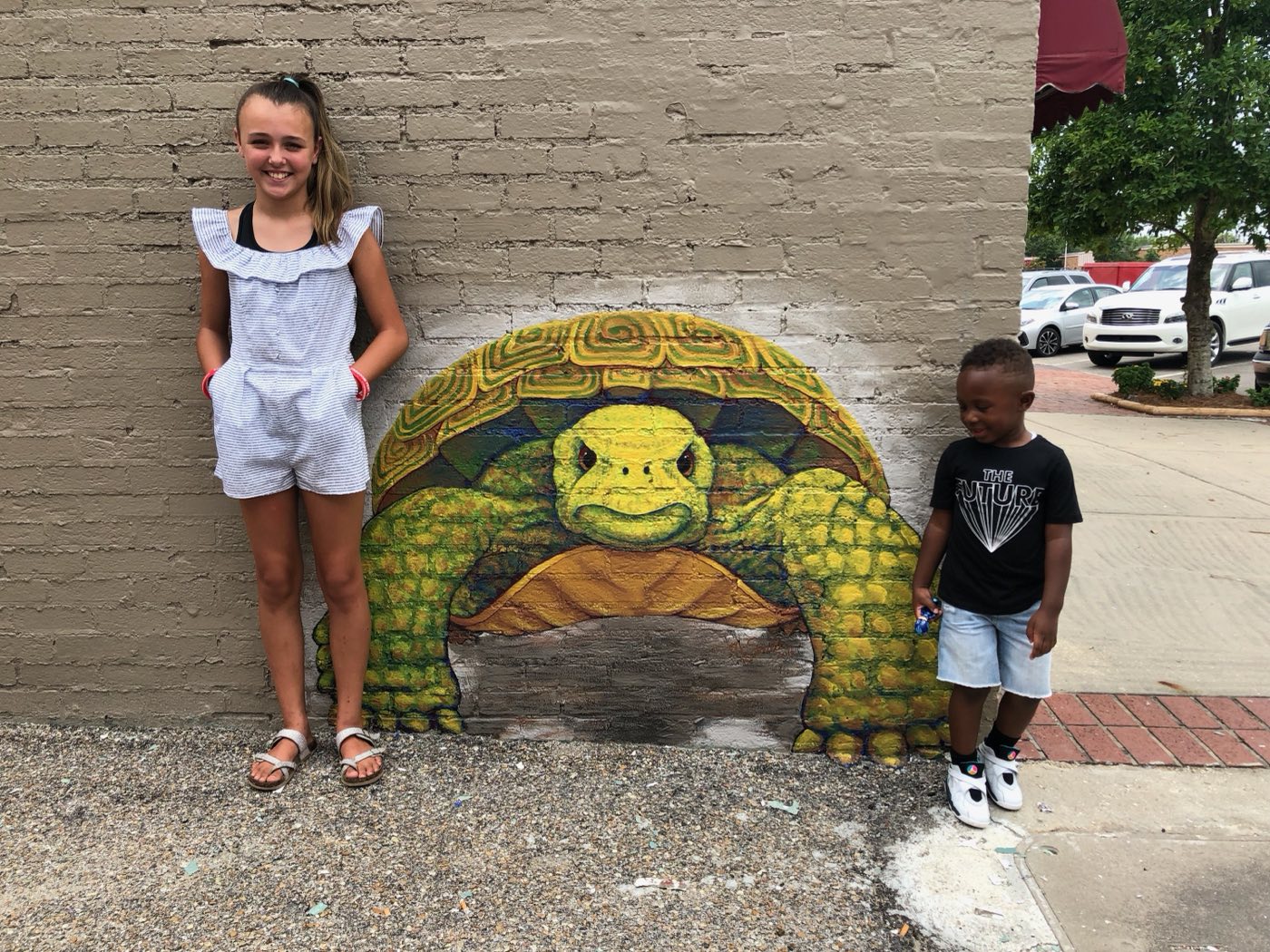
“The Southern Museum of Natural History is a hidden gem in downtown Columbia, MS. From arrival, the huge, outside wall mural draws your attention and once inside, the artifacts, wildlife mounts, and natural displays take you on a journey through the outdoor beauty that Mississippi has to offer!
As an educator, I've taken young student groups through the museum several times and their eyes tell the tale. They love participating in the ‘scavenger hunt’ of animals and relics on display. Mickey and his crew do a fantastic job of bringing this all to life in a fun, educational way.”
Jay Rayborn, Ph.D. · Chief Operations Officer, Columbia School District
Our mission
Our mission is simple: to give rural children, schools, and families — Black and white alike — unique, hands-on opportunities to explore and learn about the nature and history that surround us.
That is why a field trip here costs $5 a head, and why a class from any school in Marion County is welcome to book a morning.
Teacher questions
Call (601) 736-4910 or send a note from the contact page with your group size and a few dates that work. Daytime slots are by appointment, so the earlier you ask, the easier it is to fit.
Admission is $5 for ages 6 and up and $3 for children 3–5. Children under 3 are free.
Primary classes through high school, plus homeschool co-ops, scout troops and library groups. The tour is led in person, so it flexes to the age of the group in front of it.
Yes — scavenger-hunt activity sheets are available at the door, and most classes work them as they go.
Yes. It is all on one floor at 236 Second Street in Downtown Columbia, with street parking just off Main Street.
Regular public hours are Thursday–Saturday, 5:30–9:30 PM, and no reservation is needed for those. Daytime visits are the appointment ones.
Let's find a date
Tell us your group size and a few dates that work — we'll take it from there.